
(2026/03/12発売)エクラ・ド・リール~アメノウズメの舞~:樽屋雅徳 [吹奏楽小編成-レンタル譜]
・1配送につき税込11,000円以上のご注文で国内送料無料
・コンビニ後払い、クレジットカード、銀行振込利用可
・[在庫あり]は営業日正午までのご注文で即日出荷
・International Shipping
- 作曲: 樽屋雅徳
- 編成:24 - 31パート
- 演奏時間:0:06:45
- グレード:3
フォスターミュージック/FML-0386

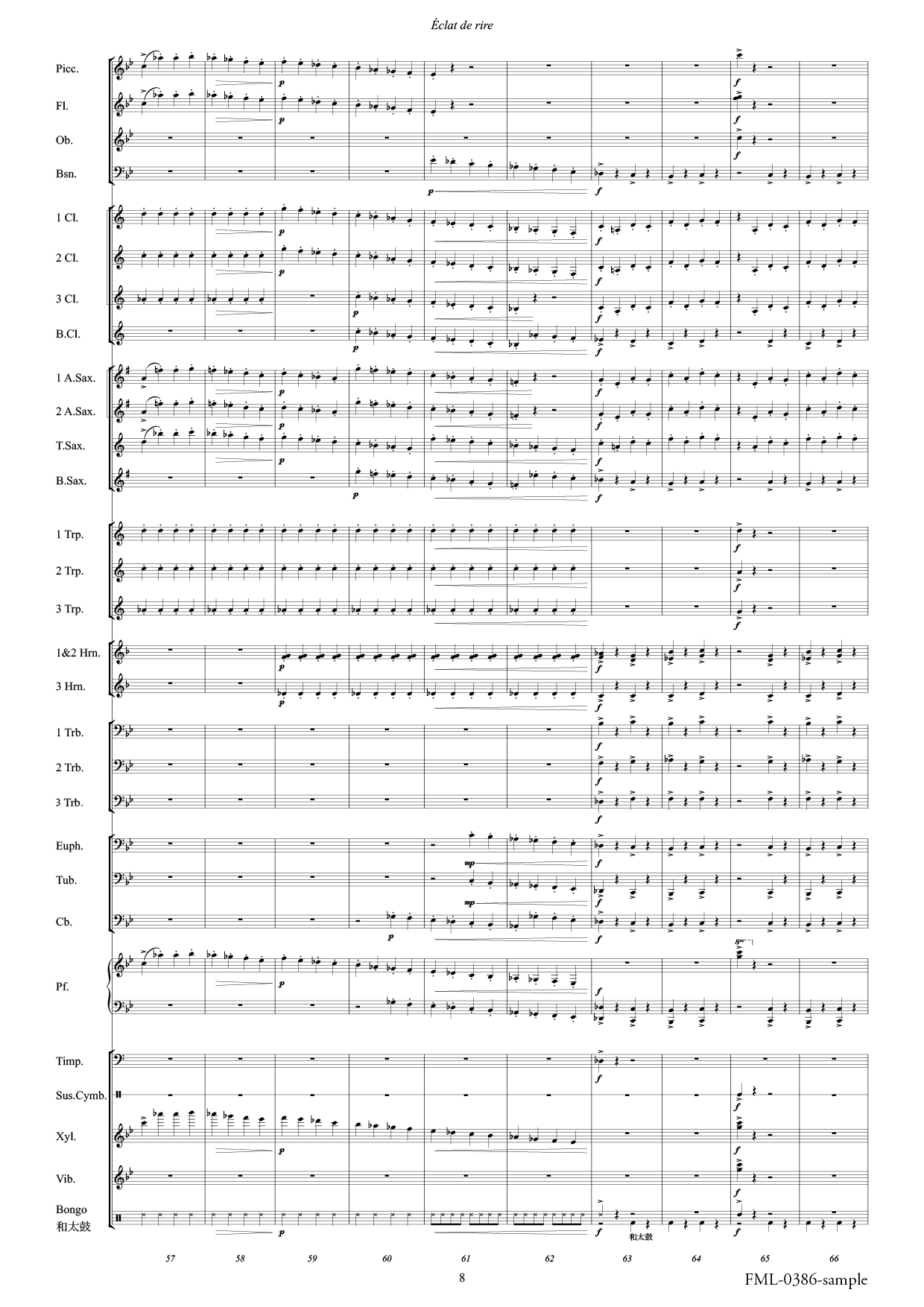
![(2026/03/12発売)エクラ・ド・リール~アメノウズメの舞~:樽屋雅徳 [吹奏楽小編成-レンタル譜]](/html/upload/save_image/FML0386_1.png)
- 概要
- 編成/曲目
- 補足/修正
- ENGLISH
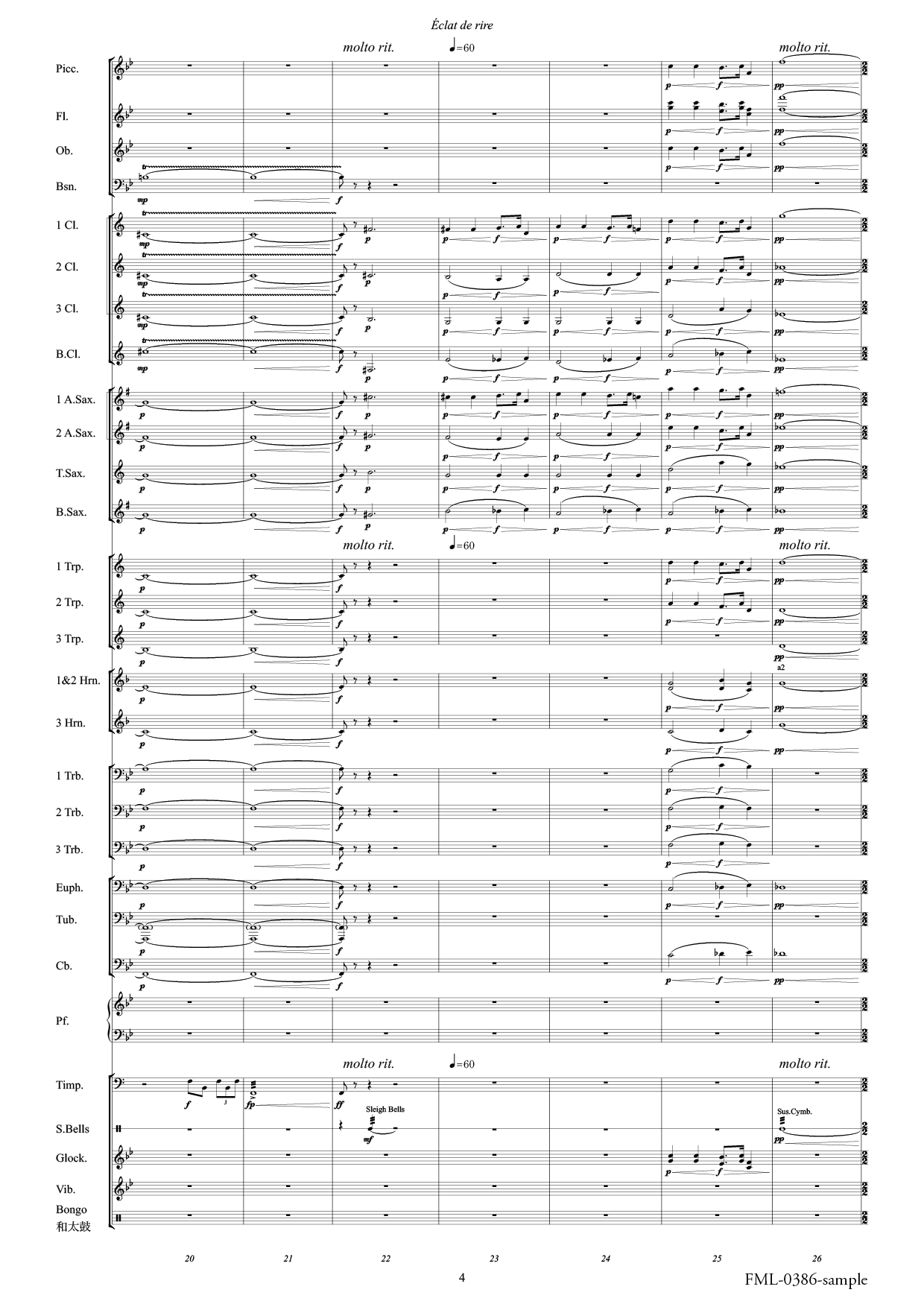
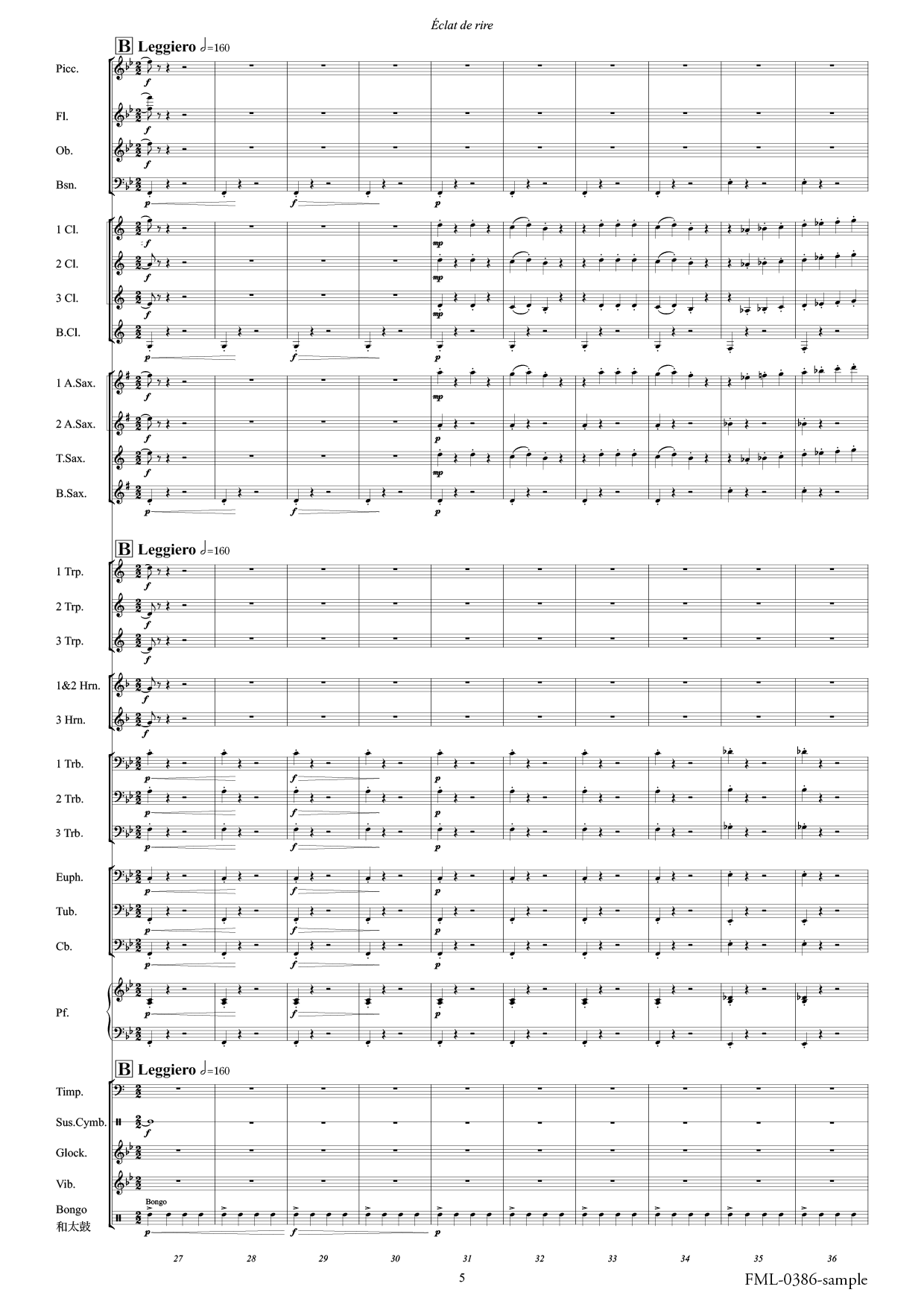
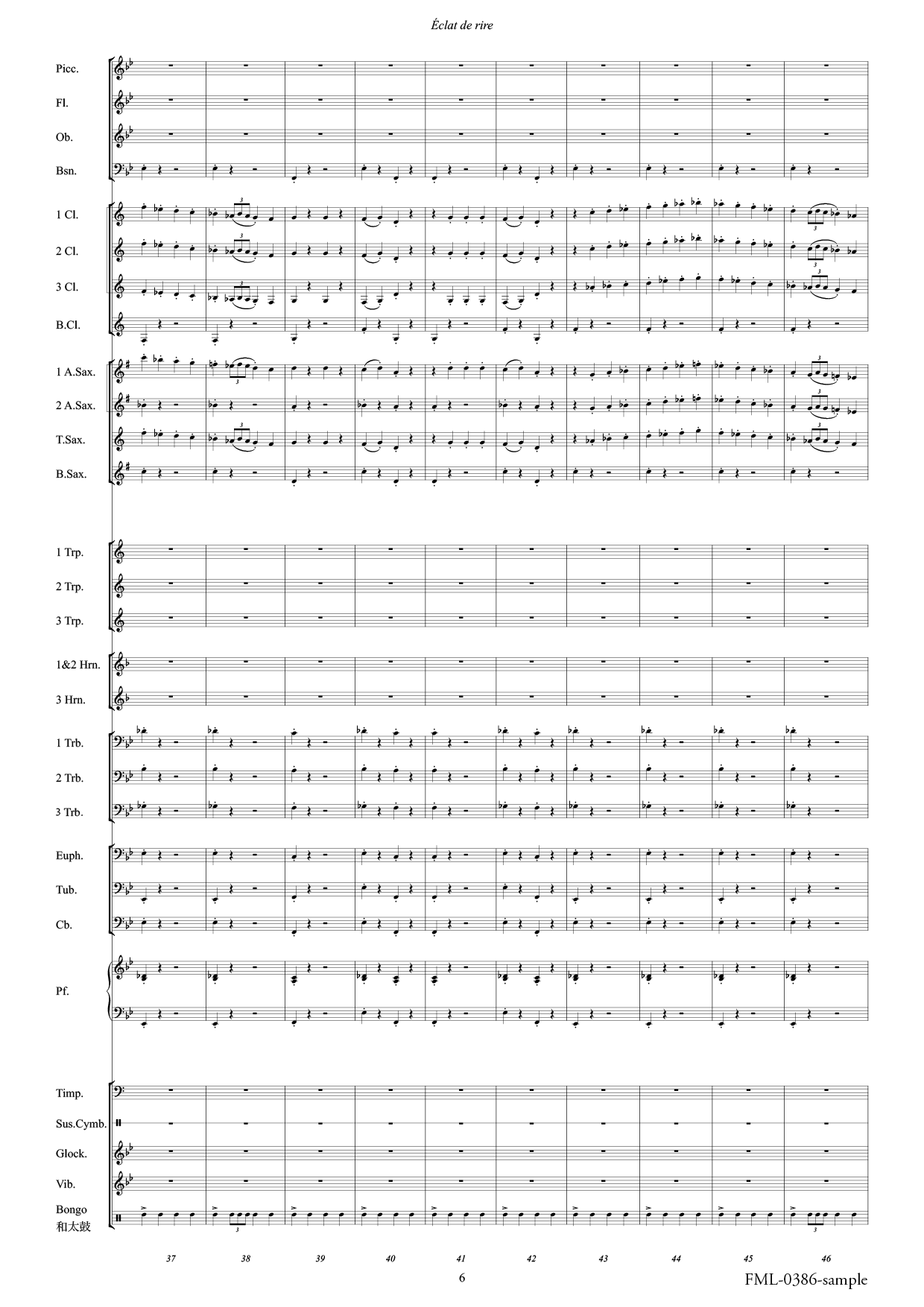
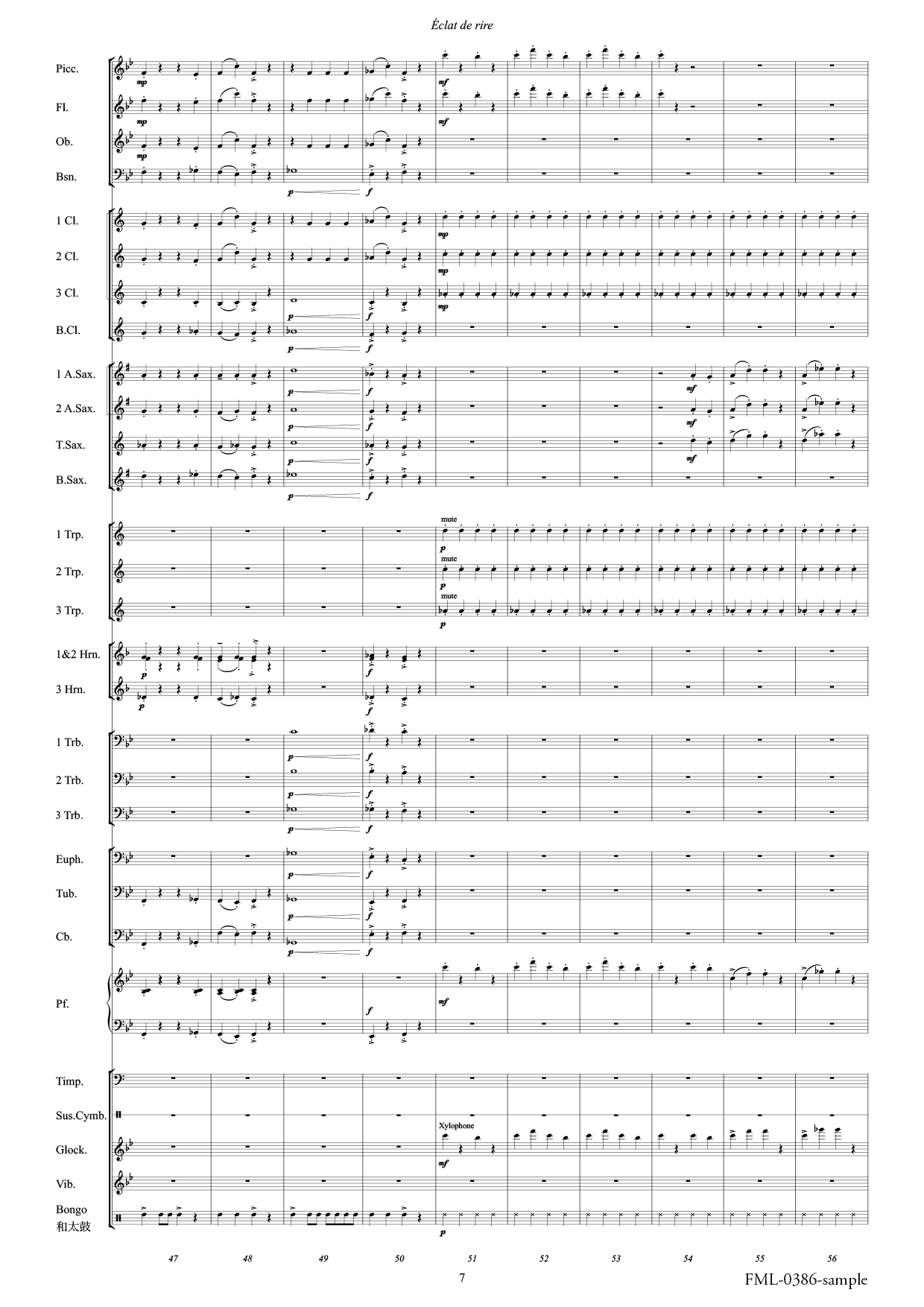
エクラ・ド・リール~アメノウズメの舞~
宮崎県・高千穂には、天照大神が天岩戸に籠もり、世界が闇に沈んだという神話が今も息づいています。その閉ざされた世界に再び光をもたらしたのが、芸能・笑い・生命力を司るアメノウズメノミコトです。
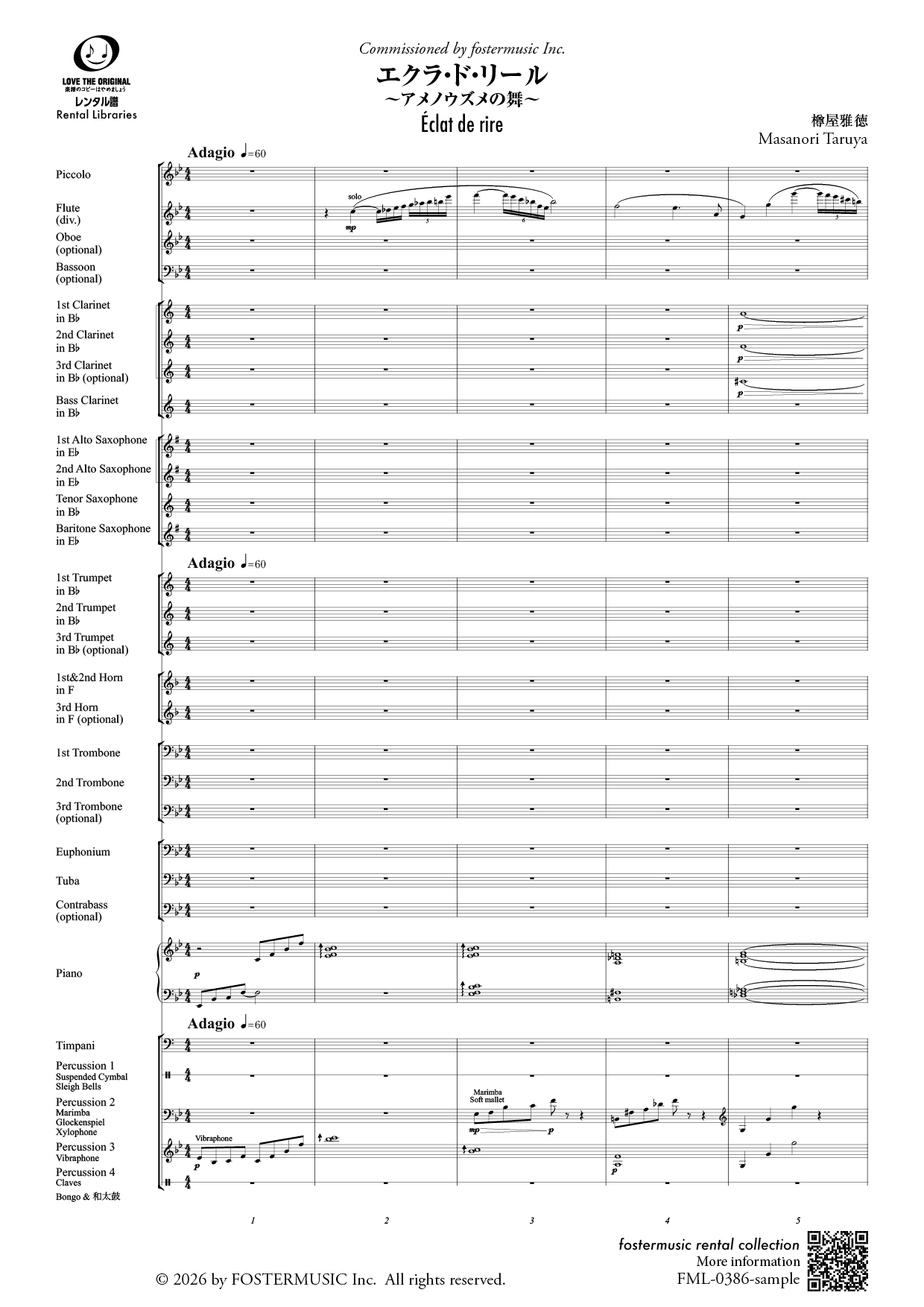
本作では、この“アメノウズメの舞”に想像を広げ、その多面的な魅力を音楽として描くことを目指しました。作品の基盤として据えたのは、素朴で親しみやすい動機です。どこか昔話の語り口を思わせるこの動機には、ウズメの持つ滑稽さや人間的な温かさを込めています。この動機は作品全体に繰り返し現れ、場面に応じてニュアンスを変えながら、さまざまな表情を見せます。一方で、音楽は次第に、宮崎・高千穂の自然を思わせる広がりを帯びていきます。深い森の落ち着いた気配や、澄んだ空気の清らかさ──そうした風景の中で、ウズメの舞は単なる滑稽さだけでなく、神楽を舞う巫女のような神聖性と力強い生命力を併せ持っていたのではないかと想像しています。旋律はしなやかに展開し、時に優美に、時に力強く流れ、ウズメの内に宿る“美”と“活力”を浮かび上がらせることを意図しました。
限られた素材をどのように変化させ、どのような工夫を加えるかは、各バンドの皆さんの解釈に委ねています。
演奏してくださる皆さんには、動機の扱い方や音色の選び方など、さまざまな表現の工夫を通して、ウズメの舞が持つ豊かな表情を自由に探っていただければ嬉しく思います。(樽屋雅徳)
仕様
- アーティスト
- 作曲: 樽屋雅徳
- 演奏形態
- 吹奏楽
- 編成
- 小編成 / 24 - 31パート
- 演奏時間
- 0:06:45
- グレード
- 3
- 商品形態
- レンタル譜(Full Score & Part)/レンタル楽譜ご利用案内
- 出版社 / 品番
- フォスターミュージック / FML-0386
- 発売日(年)
- 2026/03/12
- 【スコア】 (2026/03/12発売)エクラ・ド・リール~アメノウズメの舞~:樽屋雅徳 [吹奏楽スコア]
スタディスコア/セット・版違いなど
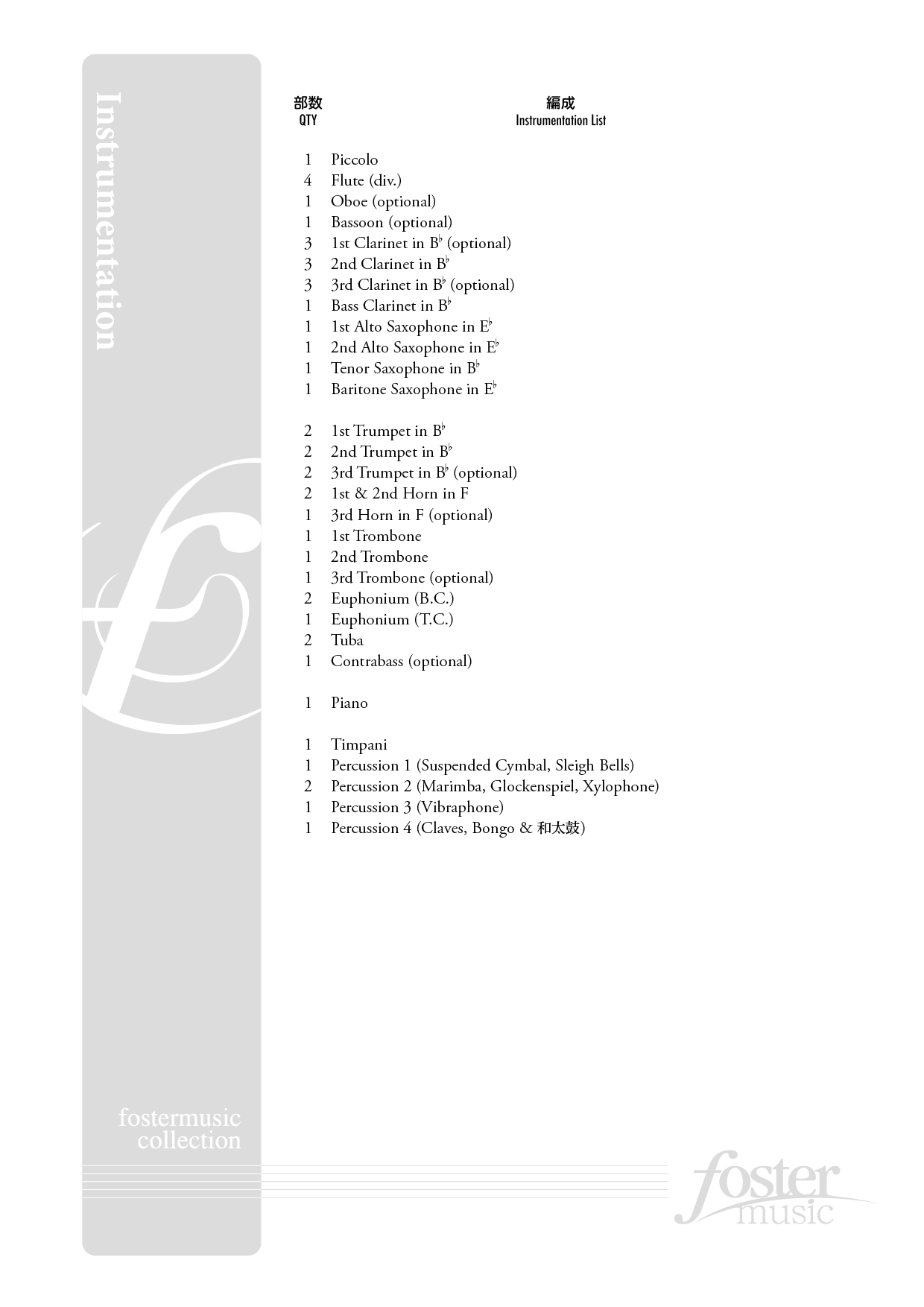
楽器編成
- Full Score
- Piccolo
- Flute (div.)
- Oboe (optional)
- Bassoon (optional)
- Bb Clarinet 1
- Bb Clarinet 2
- Bb Clarinet 3 (optional)
- Bass Clarinet
- Alto Saxophone 1
- Alto Saxophone 2
- Tenor Saxophone
- Baritone Saxophone
- Trumpet 1
- Trumpet 2
- Trumpet 3 (optional)
- Horn 1
- Horn 2
- Horn 3 (optional)
- Trombone 1
- Trombone 2
- Trombone 3 (optional)
- Euphonium (B.C./T.C.)
- Tuba
- String Bass (optional)
- Piano
- Timpani
- Percussion 1 (Suspended Cymbal, Sleigh Bells)
- Percussion 2 (Marimba, Glockenspiel, Xylophone)
- Percussion 3 (Vibraphone)
- Percussion 4 (Claves, Bongo & 和太 )
樽屋雅徳(Masanori Taruya)
1978年千葉県銚子市生まれ。武蔵野音楽大学音楽学部作曲学科卒業。佐藤博、宮本良樹各氏に師事。
フランスで吹奏楽曲「Ardent Overture」を出版。代表作として「絵のない絵本」「民衆を導く自由の女神」「マゼランの未知なる大陸への挑戦」「ラザロの復活」「マードックからの最後の手紙」などがある。
全国の吹奏楽団やマーチングバンドからの委嘱も数多く、その作品の多くが国内外問わず広く演奏され、日本でもっとも人気のある作曲家のひとりである。また、作曲・編曲の傍ら、吹奏楽指導やコンクール等の審査員、執筆活動などでも多くの成果を挙げている。
2004年~2018年まで銚子市立銚子高等学校の音楽監督を務めマーチングコンテストで全国大会へ、吹奏楽コンクールでは東関東大会、東日本大会へと導く。
現在はベルモンテウィンドオーケストラの指揮者・音楽監督を務め、指導者としても高い評価を受けている。
- サイズ
- A4/3cm未満
ECLAT DE RIRE
In Takachiho, legend still lives of how Amaterasu withdrew into the Heavenly Rock Cave, plunging the world into darkness. It was AmenoUzumenoMikoto―the deity of the performing arts, laughter, and vitality―who restored light to the sealed world.
This work expands its imagination upon “Uzume’s dance,” seeking to portray in music her manyfaceted character. At the foundation of the piece lies a simple and approachable motive. Reminiscent of the narrative tone of an old folktale, this motive embodies Uzume’s humor and her deeply human warmth. It recurs throughout the composition, transforming its nuance according to each scene and revealing a variety of expressions.
Gradually, the music broadens to evoke the natural landscapes of Miyazaki and Takachiho―the quiet presence of deep forests and the purity of crystalclear air. Within such scenery, I imagine that Uzume’s dance possessed not only playful humor but also a sacred dignity, like that of a shrine maiden performing kagura, along with a powerful life force. The melodies unfold with suppleness, at times graceful and at times vigorous, intending to illuminate the “beauty” and “vitality” that reside within Uzume.
How the limited musical materials are transformed and developed is entrusted to the interpretation of each ensemble. I would be delighted if performers, through thoughtful shaping of the motive and sensitive choices of tone color, freely explore the rich and varied expressions inherent in Uzume’s dance.
Specifications
- ARTIST
- Composer: Masanori TARUYA
- INSTRUMENTATION
- Windband / 16-25 Players
- DURATION
- 0:06:45
- GRADE
- 3
- PRODUCT TYPE
- Set / RENTAL (Full Score & Part)
- PUBLISHER / Code
- fostermusic Inc. / FML-0386
- RELEASE
- 2026/03/12
- OVERSEAS SHIPMENT
- EUROPEAN PARTS
- Not Included